
Your Place or Mine? A 21st Century Essay on (Same) Sex
Please select all options before adding to cart.
In a fascinating and radical critique of identity and class, Your Place or Mine? examines the modern invention of homosexuality as a social construct that emerged in the nineteenth century. Examining “fairies” in Victorian England, transmen in early twentieth-century Manhattan, sexual politics in Soviet Russia, and Stonewall’s attempt to combine gay self-defense with revolutionary critique, Dauvé turns his keen eye on contemporary political correctness in the United States and the rise of reactionary discourse.
The utopian vision of Your Place or Mine? is vital to a just society: the invention of a world where one can be human without having to be classified by sexual practices or gender expressions. Where one need not find shelter in definition or assimilation. A refreshing reminder that we are not all the same, nor do we need to be.
Praise
“Do you ever ask yourself why there is so little class analysis applied to the assimilation of the ‘gay movement,’ or even of the previously glamorous and revolutionary ‘subcultures’ denoted by the word ‘queer,’ why today’s ‘activists’ are so keen on reformist political strategies, why the current LGBTQQIP2SAA configuration used to describe the ‘gay’ or ‘queer’ community indicates a factionalization of sexual identity that has become so inclusive as to become almost meaningless ? I have, and if you have too, Gilles Dauvé’s Your Place or Mine? A 21st Century Essay on (Same) Sex is the right book to be holding in your hands.”
—Bruce LaBruce
About the Author
Gilles Dauvé is a French political theorist. He was a participant in the 1968 Paris rebellion and a writer for the radical gay magazine Fléau Social. His books Eclipse and Re-emergence of the Communist Movement and From Crisis to Communisation are published by PM Press.
You May Also Like
Anarchy and the Sex Question: Essays on Women and Emancipation, 1896-1926
"The Sex Question" emerged for Goldman in multiple contexts as varied as women's suffrage, "free love," birth control, the "New Woman," homosexuality, marriage, love, and literature.
Bodies and Barriers: Queer Activists on Health
Bodies and Barriers illuminates the ubiquitous health challenges LGBT people experience throughout their lives and challenges the conventional wisdom about health care delivery.
Eclipse and Re-emergence of the Communist Movement
Doing away with wage-labor, class, the State, and private property is possible, and can only be achieved by a historical break, it will not be a peaceful, gradual, piecemeal evolution.
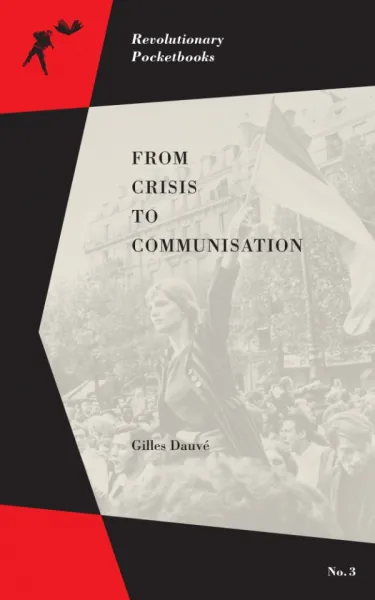
From Crisis to Communisation
Radical theory is meaningful if it addresses the question: How can proletarian resistance to exploitation and dispossession achieve more than aggravate the crisis? How can it reshape the world?
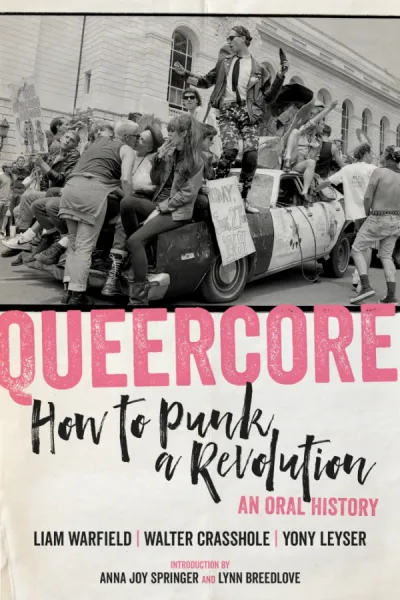
Queercore: How to Punk a Revolution: An Oral History
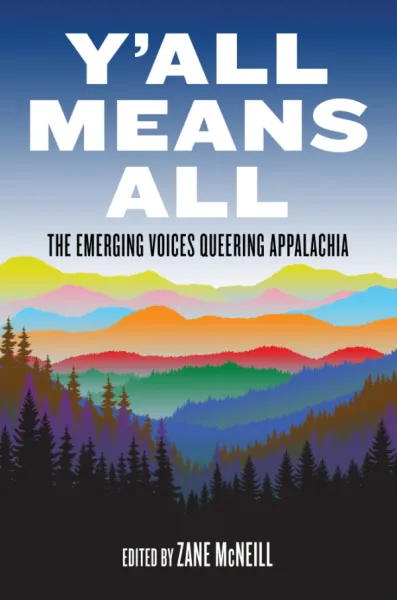
Y'all Means All: The Emerging Voices Queering Appalachia
This book demonstrates above all else that Appalachia and its people are filled with a vitality and passion for their region which will slowly but surely effect long-lasting and positive changes in the region.
Recently Viewed