
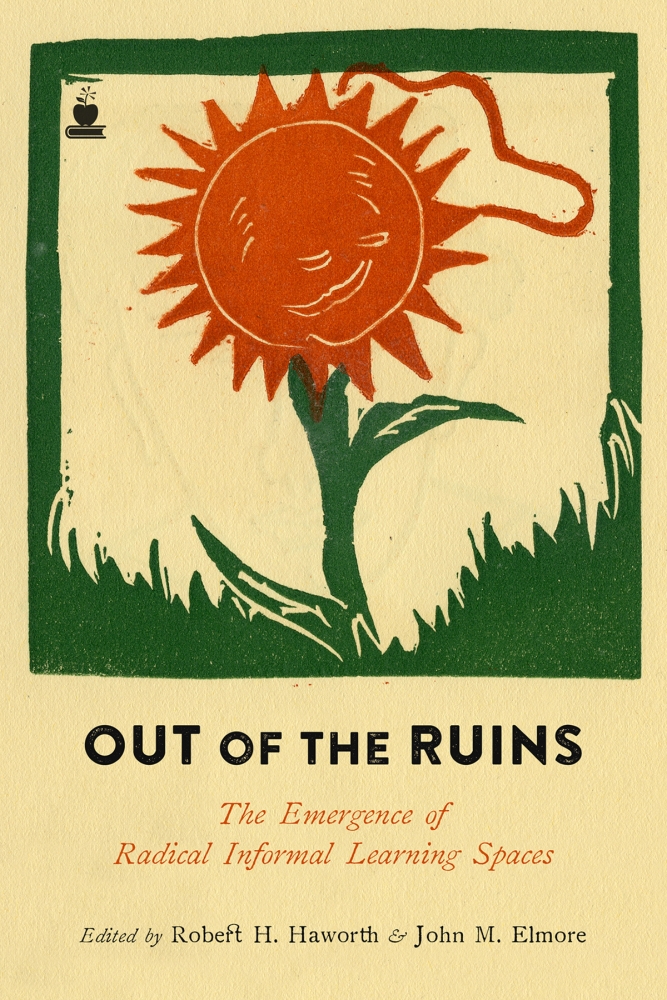
Out of the Ruins: The Emergence of Radical Informal Learning Spaces
Please select all options before adding to cart.
Contemporary educational practices and policies across the world are heeding the calls of Wall Street for more corporate control, privatization, and standardized accountability. There are definite shifts and movements towards more capitalist interventions of efficiency and an adherence to market fundamentalist values within the sphere of public education. In many cases, educational policies are created to uphold and serve particular social, political, and economic ends. Schools, in a sense, have been tools to reproduce hierarchical, authoritarian, and hyper-individualistic models of social order. From the industrial era to our recent expansion of the knowledge economy, education has been at the forefront of manufacturing and exploiting particular populations within our society.
The important news is that emancipatory educational practices are emerging. Many are emanating outside the constraints of our dominant institutions and are influenced by more participatory and collective actions. In many cases, these alternatives have been undervalued or even excluded within the educational research. From an international perspective, some of these radical informal learning spaces are seen as a threat by many failed states and corporate entities.
Out of the Ruins sets out to explore and discuss the emergence of alternative learning spaces that directly challenge the pairing of public education with particular dominant capitalist and statist structures. The authors construct philosophical, political, economic and social arguments that focus on radical informal learning as a way to contest efforts to commodify and privatize our everyday educational experiences. The major themes include the politics of learning in our formal settings, constructing new theories on our informal practices, collective examples of how radical informal learning practices and experiences operate, and how individuals and collectives struggle to share these narratives within and outside of institutions.
Contributors include David Gabbard, Rhiannon Firth, Andrew Robinson, Farhang Rouhani, Petar Jandrić, Ana Kuzmanić, Sarah Amsler, Dana Williams, Andre Pusey, Jeff Shantz, Sandra Jeppesen, Joanna Adamiak, Erin Dyke, Eli Meyerhoff, David I. Backer, Matthew Bissen, Jacques Laroche, Aleksandra Perisic, and Jason Wozniak.
Praise:
“How do we create spaces of learning that will help us to avoid the pitfalls of routine, hierarchy, and passivity? In other words, how do we learn to change the world, together? Those trying to figure this out will enjoy reading about the experiments, strategies, and logics of anarchist education in this rich collection.”
—Lesley Wood, professor of sociology, York University
“Out of the Ruins provides a powerful critique of the current state of education—and teaching—by exploring a diverse range of radical pedagogical practices and liberatory educational theories, coupled with on-the-ground case studies of informal alternative learning spaces. Moving beyond simplistic calls for ‘educational reform’ each contributor challenges us in some way to rethink the entire social system as it relates to education, including the ways that inequality and capitalist values shape the prevailing hierarchical, market-driven approaches to learning, teaching, and students.”
—Jake Alimahomed-Wilson, associate professor of sociology, California State University, Long Beach
“Out of the Ruins is a timely book that counters current narrow conceptions about the limits of education and challenges neoliberal hegemony within the way we conceive of educational possibilities and building new forms of educational communities that can think outside these parameters. The editors have called forth an international array of cutting-edge scholars that lay bare a powerful critique of narrow conceptions of teaching, learning and education. A must read!”
—Abraham P. DeLeon, associate professor, University of Texas at San Antonio
“Haworth and Elmore tell us that we have a right to a new utopia, a transformative vision of society and interconnectedness where learning supports justice, redefined relations with the rest of nature and the creation of healthy communities. They call this radical informal learning. We might call it the true purpose of learning. The passion, anger and commitment of the contributors can be found on every page.”
—Budd L. Hall, co-chair of the UNESCO Chair in Community Based Research and Social Responsibility in Higher Education, professor of community development, University of Victoria
About the Editors:
Robert Haworth is an assistant professor in the Department of Professional and Secondary Education at West Chester University, Pennsylvania. He teaches courses focusing on the social foundations of education, anarchism, and critical pedagogies. He has published and presented internationally on anarchism, youth culture, informal learning spaces, and critical social studies education. His previous book, Anarchist Pedagogies: Collective Actions, Theories, and Critical Reflections on Education, was also published by PM Press.
John M. Elmore is professor and chairperson in the Department of Professional and Secondary Education at West Chester University, Pennsylvania, where he teaches courses in critical pedagogy, politics of education, history of education, and philosophy of education. His research and publications have focused primarily on education for social justice, democracy, atheism, and antiauthoritarianism.
See and hear editor interviews, book reviews, and other news on Robert H. Haworth’s page HERE
See and hear editor interviews, book reviews, and other news on John M. Elmore’s page HERE
You May Also Like
Journey Through Utopia: A Critical Examination of Imagined Worlds in Western Literature
A richly detailed and critically compelling examination of utopian literature, beginning with Plato’s Republic and continuing through to Huxley’s Brave New World.
Anarchism and Education: A Philosophical Perspective
A philosophical account of the neglected tradition of anarchist thought on education.
Anarchist Pedagogies: Collective Actions, Theories, and Critical Reflections on Education
"This original contribution to revolutionary praxis in education could not come at a more urgent moment. It deserves to be read and its recommendations unleashed in the battlefields of capital." —Peter McLaren
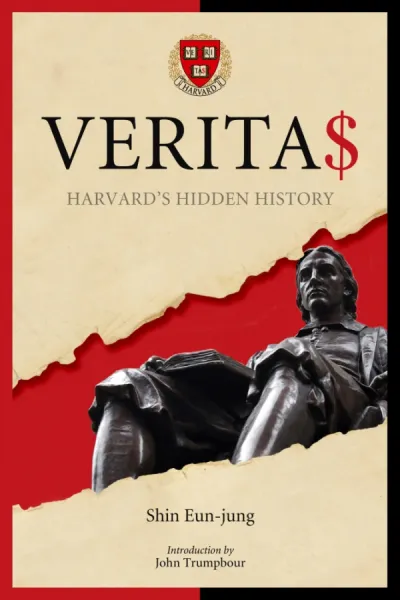
Verita$: Harvard's Hidden History
A critical examination of Harvard’s monumental but disconcerting global influence and power, this book examines aspects of Harvard’s history not generally known.
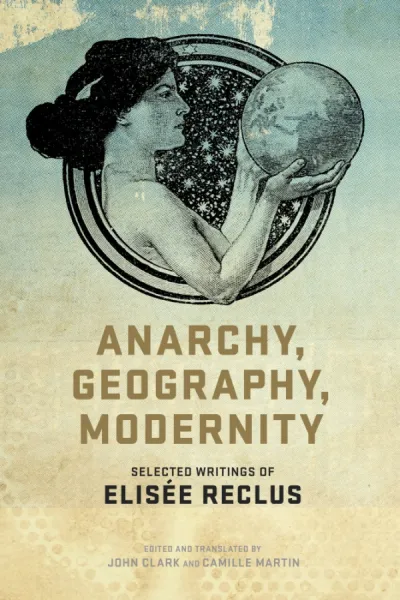
Anarchy, Geography, Modernity: Selected Writings of Elisée Reclus
A comprehensive introduction to the thought of this anarchist geographer and political theorist analyzing his sweeping historical and theoretical synthesis.
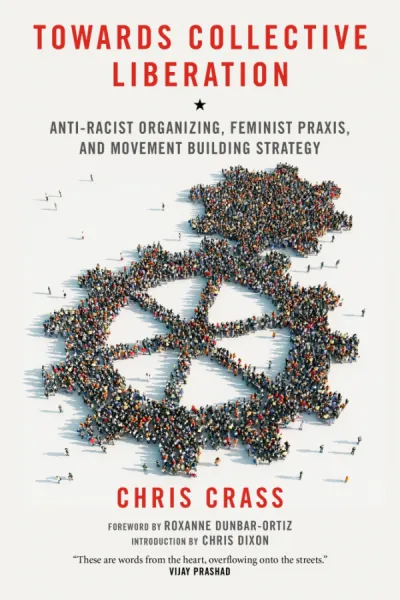
Towards Collective Liberation: Anti-Racist Organizing, Feminist Praxis, and Movement Building Strategy
Towards Collective Liberation is for activists engaging with dynamic questions of how to create and support effective movements for visionary systemic change.