
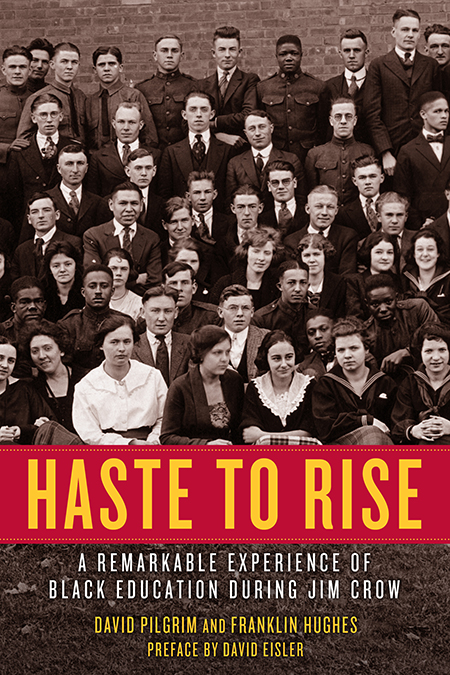
Haste to Rise: A Remarkable Experience of Black Education during Jim Crow
Please select all options before adding to cart.
Between 1910 and the mid-1920s, more than sixty black students from the South bravely traveled north to Ferris Institute, a small, mostly white school in Big Rapids, Michigan. They came to enroll in college programs and college preparatory courses—and to escape, if only temporarily, the daily and ubiquitous indignities suffered under the Jim Crow racial hierarchy. They excelled in their studies and became accomplished in their professional fields. Many went on to both ignite and help lead the explosive civil rights movement. Very few people know their stories—until now.
Haste to Rise is a book about the incredible resilience and breathtaking accomplishments of those students. It was written to unearth, contextualize, and share their stories and important lessons with this generation. Along the way we are introduced to dozens of these Jim Crow–era students, including the first African American to win a case before the U.S. Supreme Court, Belford Lawson, the lead attorney in New Negro Alliance v. Sanitary Grocery Co. (1938), a landmark court battle that safeguarded the right to picket. We also meet one of Lawson’s contemporaries, Percival L. Prattis, a pioneering journalist and influential newspaper executive. In 1947, he became the first African American news correspondent admitted to the U.S. House and Senate press galleries. There is also an in-depth look into the life and work of the institute’s founder, Woodbridge Nathan Ferris, a racial justice pioneer who created educational opportunities for women, international students, and African Americans.
Haste to Rise is a challenge to others to look beyond a university’s official history and seek a more complete knowledge of its past. This is American history done right!
Praise:
For David Pilgrim's previous works:
“One of the most important contributions to the study of American history that I have ever experienced.”
—Henry Louis Gates Jr., director of the W.E.B. Du Bois Institute for African American Research
“This was a horrific time in our history, but it needs to be taught and seen and heard. This is very well done, very well done.”
—Malaak Shabazz, daughter of Malcolm X and Betty Shabazz, on the Jim Crow Museum
“The museum’s contents are only a small part of the damaging effects of the Jim Crow laws that were found all across America, including bright and sunny California. This history is not only an important part of understanding where America was but, in an age of states making it harder and harder for citizens to vote, it is relevant to note that we have been here before.”
—Henry Rollins, host of the History Channel’s 10 Things You Don’t Know About
“For decades the author has been on a Pilgrimage to bring out from our dank closets the racial skeletons of our past. His is a crucial mission, because he forces us to realize that race relations grew worse in the first several decades of the twentieth century—something many Americans never knew or now want to suppress. This book allows us to see, even feel the racism of just a generation or two ago—and Pilgrim shows that elements of it continue, even today. See it! Read it! Feel it! Then help us all transcend it!”
—James W. Loewen, author of Lies My Teacher Told Me and coeditor of The Confederate and Neo-Confederate Reader
“The museum has been one of my treasured go-to resources for teaching people about the deep-seated roots of the racism that persists in our collective subconscious. Only by facing our history and its hold on our psyche can we construct a better culture. This work is invaluable.”
—damali ayo, author of How to Rent a Negro and Obamistan! Land without Racism
About the Contributors:
David Pilgrim is a public speaker and one of America’s leading experts on issues relating to multiculturalism, diversity, and race relations. He is best known as the founder and curator of the Jim Crow Museum: a collection of more than fourteen thousand racist artifacts located at Ferris State University. A professor of sociology at Ferris State, Pilgrim is also head of Diversity and Inclusion. He is the author of Understanding Jim Crow and Watermelons, Nooses, and Straight Razors.
Franklin Hughes is a multimedia specialist for the Diversity and Inclusion Office at Ferris State University. He is the primary content creator of audio and video for the Jim Crow Museum and also maintains the website and social media platforms. Hughes has been a member of the Jim Crow Museum team since fall 2011 and has written many articles for the museum’s website.
David Eisler has served as president of Ferris State University since July 2003. He believes the higher education experience should prepare students for successful careers, create a pattern of intellectual rigor, develop a commitment to community engagement, and provide the foundation for lifelong learning.
See and hear author interviews, book reviews, and other news on David Pilgrim's page HERE
See and hear author interviews, book reviews, and other news on Franklin Hughe's page HERE
You May Also Like
Understanding Jim Crow: Using Racist Memorabilia to Teach Tolerance and Promote Social Justice
This book introduces readers to the Jim Crow Museum of Racist Memorabilia, a collection of more than ten thousand contemptible collectibles that are used to engage visitors in intense and intelligent discussions about race.
Fighting Times: Organizing on the Front Lines of the Class War
This inspiring tale recounts Jon Melrod's thirteen-year journey to harness working-class militancy and jump start a revolution on the shop floor of American Motors.
Watermelons, Nooses, and Straight Razors: Stories from the Jim Crow Museum
Watermelons, Nooses, and Straight Razors uses images from the Jim Crow Museum and stories from the author's journey, challenging the integrity of racial narratives.
Raising Free People: Unschooling as Liberation and Healing Work
A Soldier's Story: Revolutionary Writings by a New Afrikan Anarchist, Third Edition
Balagoon combined anarchism with Black nationalism, broke the rules of sexual and political conformity, and took up arms against the white-supremacist state.
Jackson Rising Redux: Lessons on Building the Future in the Present
The Ghetto-bred Anarchist
The Ghetto-bred Anarchist is an incendiary underground classic that burns bright with revolutionary wisdom. Hybachi's hard-fought reflections and strategies show how we can liberate ourselves from within the cracks of capitalism.
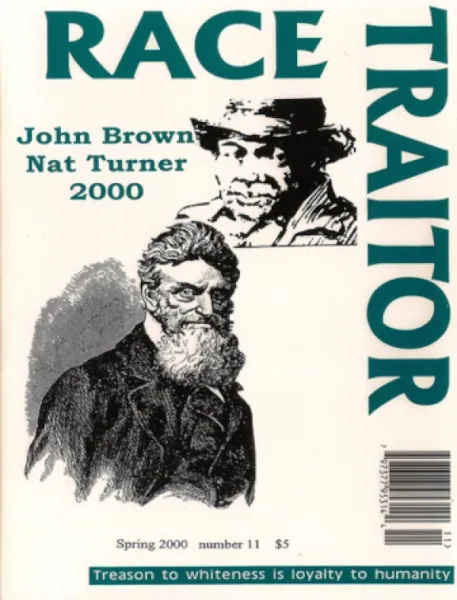
Race Traitor Journal
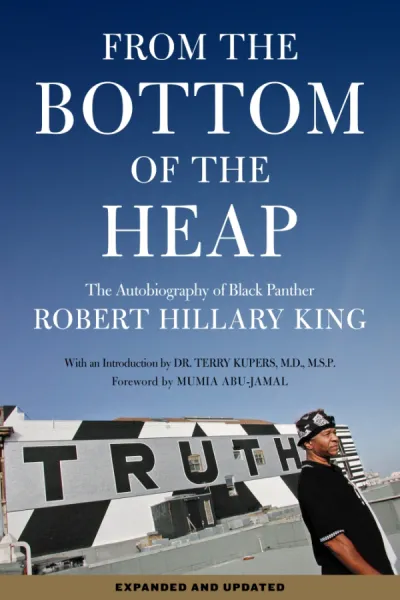
From the Bottom of the Heap: The Autobiography of Black Panther Robert Hillary King
This story is simply and humbly told, it strips bare the economic and social injustices inherent in our society, while continuing to be a powerful literary testimony to our own strength and capacity to overcome.