
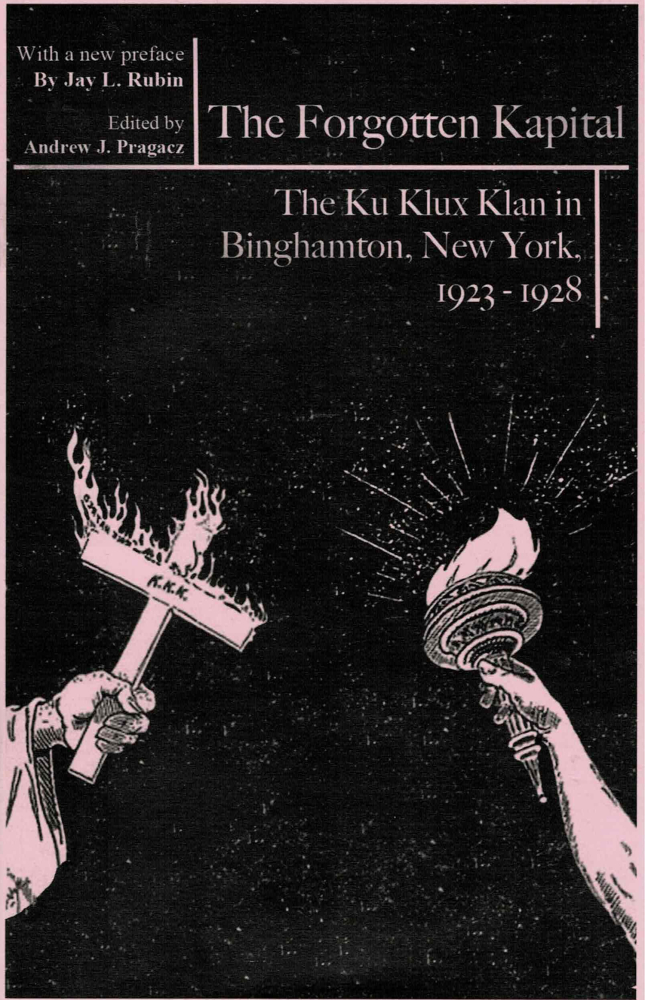
The Forgotten Kapital: The Ku Klux Klan in Binghamton, New York, 1923-1928
This study describes the activities of the KKK in Binghamton, New York, the state's headquarters for the Klan in the 1920's. It also examines the social and political factors involved in the Klan's growth and decline.
From the pamhplet:
The revived Ku Klux Klan of the 1920's was a nationwide phenomenon strikingly different from its Recontruction ancestor. Where the first Klan was based in the South, its successor boasted nationwide appeal. In the postwar years, between two and five million Americans knelt before a fiery cross and pledged their fraternal allegiance and political energies to the Knights of the Ku Klux Klan. The invisible Empire, aptly termed by one journalist "the most vigorous, active, and effective force in American life, outside buisness," touched every corner of the nation. Powerful Klan realms existed in the northern industrial states of Indiana, Ohio, and Illinois. Oregon, a state which was 97 percent white, had more Klan members than Mississippi, South Carolina, and Virginia combined. In 1924, nearly two-thrids of all Klansmen came from states outside the original Confederacy.
Following initial success with recruitment drives above the Mason-Dixon Line, Klan organizers were dispatched from Atlanta in large numbers after 1921 and given specific domains from which to enlist new members. New York State figured high in Klan membership plans. If any state in the nation could be described as teetering on the brink of domination by Catholics, Jews, and the foreign-born, New York, with its exceptional concentration of immigrant groups, came the closest.
You May Also Like
The Day the Klan Came to Town
It Did Happen Here: An Antifascist People’s History
A captivating oral history from a diverse group of people who successfully organized against white nationalist violence and right-wing groups.
Insurgent Supremacists: The U.S. Far Right's Challenge to State and Empire
This book takes readers on a tour of neonazis and Christian theocrats, by way of the patriot movement, the LaRouchites, and the alt-right.
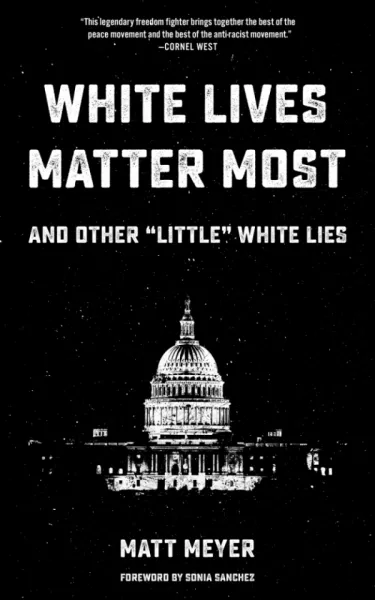
White Lives Matter Most: And Other "Little" White Lies
These essays reveal the successful strategies and methods used in recent campaigns to free Puerto Rican and Black Panther political prisoners, confront neo-Nazis in Charlottesville, and more.
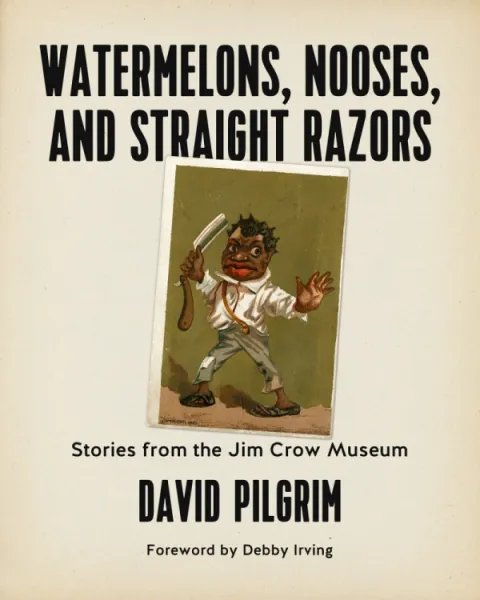
Watermelons, Nooses, and Straight Razors: Stories from the Jim Crow Museum
Watermelons, Nooses, and Straight Razors uses images from the Jim Crow Museum and stories from the author's journey, challenging the integrity of racial narratives.
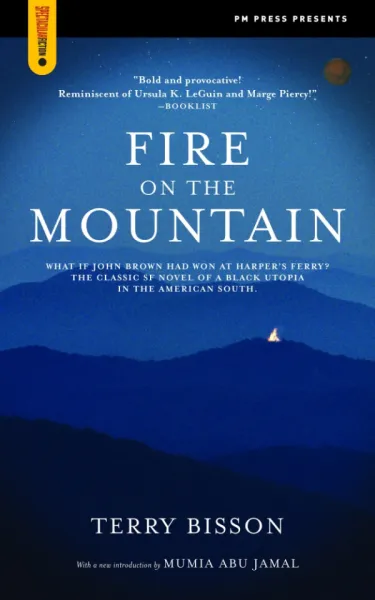
Fire on the Mountain
Presenting an alternative version of African American history, this novel explores what might have happened if John Brown's 1859 raid on Harper's Ferry had been successful.
Recently Viewed
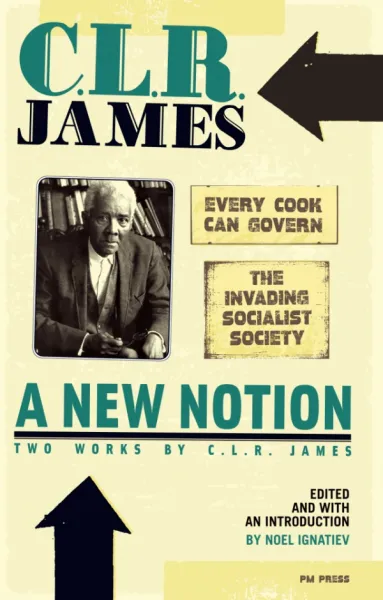
A New Notion: Two Works by C.L.R. James: "Every Cook Can Govern" and "The Invading Socialist Society"
In this volume, Noel Ignatiev, provides an extensive introduction to James' life and thought, before presenting two critical works that illustrate the tremendous breadth and depth of James' worldview.