
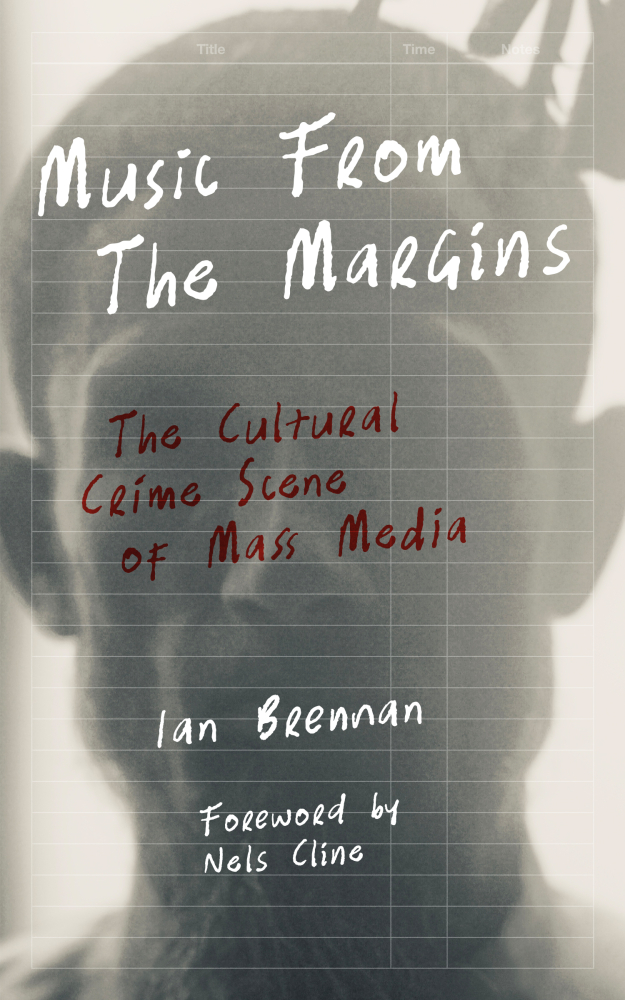
Music from the Margins: The Cultural Crime Scene of Mass Media
Pre-order. This is not in stock yet, expected April 2027. It ships when it arrives, and anything else you order with it may be sent separately.
Available for preorder.
Music from the Margins is a passionate defense of listening itself, and a celebration of how denied and devalued voices are often the ones most worth hearing.
Mass media is a crime scene. It steals marginalized voices, drowns imagination beneath commercial noise, turns art into spectacle, and weakens the direct human connections that give culture meaning.
In this provocative and deeply personal new work, acclaimed producer and field recordist Ian Brennan charts a radically different path. Part manifesto, part travelogue, part creative handbook, the book gathers decades of hard-earned insights from a life spent listening to people the world too often ignores.
Brennan offers a series of concise, evocative reflections on creativity, perception, and artistic practice, meditations designed not merely to be read but returned to again and again. Throughout are also compilations of extraordinary stories from his ongoing field-recording journeys, accompanied by striking photographs from Marilena Umuhoza Delli.
Travel from the mountains of Lesotho, where rival Famo music gangs have left trails of bloodshed, to Appalachian snake-handling churches preserving echoes of proto-rockabilly. Encounter ancient hymns sung in Ethiopia’s nearly vanished Ge’ez language, endangered musical traditions among minority communities in northern Laos, songs of survival from the Tigray people, voices from Kiribati as rising seas threaten their entire nation, and the haunting sounds of Mississippi’s infamous Parchman Prison.
Praise
“Most music books are ivory tower musings or fanboy indulgences. Ian Brennan's books are among the few that are brave, challenging and important.”
—Michel Faber, author of LISTEN: On Music, Sound & Us and the novel Under the Skin
“Music is one of the best doors into a culture and Ian Brennan has opened them in more far-off corners than anyone. He writes of the people he meets and their music with vivid directness and great generosity of spirit.”
—Grammy-nominated producer, Joe Boyd (Nick Drake, Richard & Linda Thompson, Pink Floyd) and author of And the Roots of Rhythm Remain and White Bicycles
“An activist and ambassador for the overlooked and underappreciated musicians of the world. Brennan is an important counterculture figure of our time. His writing, like his productions, deserve a spotlight.”
—Ted Hughes, award winning poet
About the Contributors
Ian Brennan is a Grammy-winning music producer who has produced three other Grammy-nominated albums. He is the author of ten books and has worked with the likes of filmmaker John Waters, Merle Haggard, and Green Day, among others. His work with international artists such as the Zomba Prison Project, Tanzania Albinism Collective, and Khmer Rouge Survivors, has been featured on the front page of the New York Times and on an Emmy-winning 60 Minutes segment with Anderson Cooper reporting. Since 1993 he has taught violence prevention and conflict resolution around the world for such prestigious organizations as the Smithsonian, New York’s New School, Berklee College of Music, the University of London, the University of California–Berkeley, and the Accademia Nazionale delle Scienze in Rome. He lives in San Francisco, CA.
Guitarist and composer, Nels Cline, was named one of the "Top 100 Guitarists of All Time" by Rolling Stone magazine. Cline joined the band Wilco in 2004 and has played on over 200 albums by various artists as well as his own solo projects. He has collaborated with the likes of Yoko Ono, Ornette Coleman, Rickie Lee Jones, Wayne Kramer (MC5), Rufus Wainwright, Mike Watt (The Minutemen), Lee Randaldo (Sonic Youth), Lydia Lunch, and Billy Bragg.
Marilena Umuhoza Delli is an Italian Rwandan photographer, author, and filmmaker whose photographic work has been published around the world by VICE, Libération, Corriere della Sera, Le Monde, Rolling Stone, and Smithsonian among others, and has photographed the covers of more than three dozen international music albums. She has written two Italian-language books about racism and growing up with an immigrant mother in Italy's most redneck region.
You May Also Like
If It Sounds Good, It Is Good: Seeking Subversion, Transcendence, and Solace in America's Music
An exploration of American roots music as an art of poor, working people counter to what academics say and show how music is essential.
Missing Music: Voices from Where the Dirt Roads End
Missing Music details Grammy-winning music producer and author Ian Brennan's ongoing quest to provide musical platforms for underrepresented nations and populations around the world.

Muse-Sick: a music manifesto in fifty-nine notes
In fifty-nine concise and clear points, Brennan reveals how corporate media has constricted local culture and individual creativity, leading to a lack of diversity within “diversity.”
Silenced by Sound: The Music Meritocracy Myth
A powerful exploration of the challenges facing art, music, and media in the digital era.
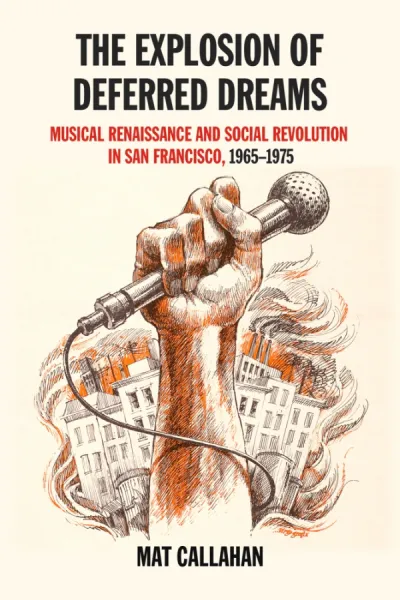
The Explosion of Deferred Dreams: Musical Renaissance and Social Revolution in San Francisco, 1965-1975
The Explosion of Deferred Dreams offers a critical re-examination of the interwoven political and musical happenings in San Francisco in the Sixties.

The Fascist Groove Thing: A History of Thatcher's Britain in 21 Mixtapes
This book collects five hundred interesting songs that addressed one alarming feature of Thatcher’s Britain or another.
Recently Viewed

They Call It Conspiracy, We Call It Resistance: The Writings and Actions of Ray Luc Levasseur
A forgotten history of guerrilla resistance inside the heart of the American empire.