
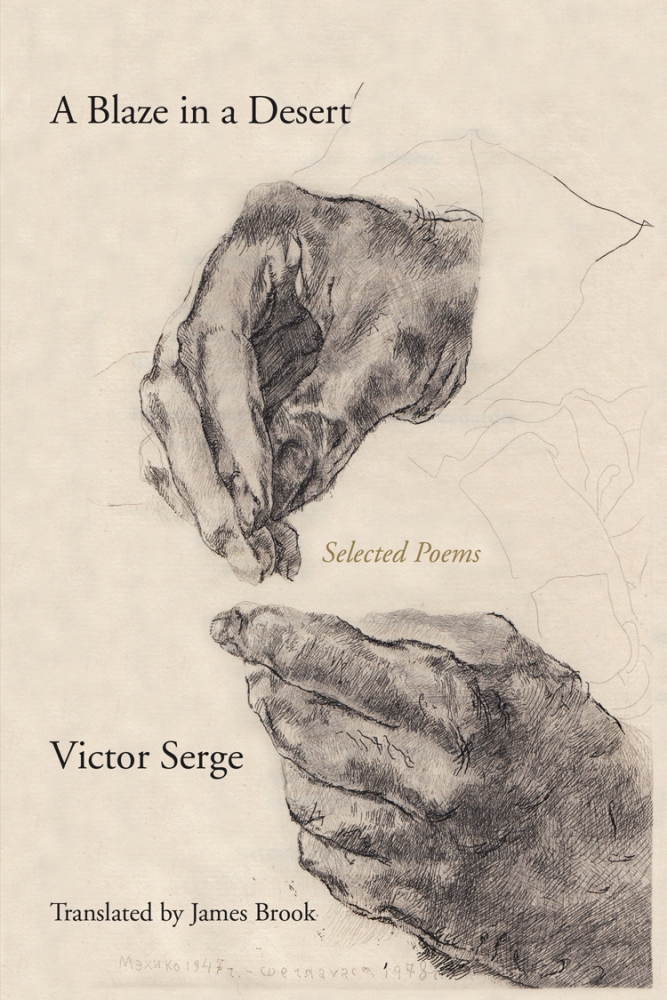
A Blaze in a Desert: Selected Poems
Please select all options before adding to cart.
Victor Serge (1890–1947) played many parts, as he recounted in his indelible Memoirs of a Revolutionary. The son of anti-czarist exiles in Brussels, Serge was a young anarchist in Paris; a syndicalist rebel in Barcelona; a Bolshevik in Petrograd; a Comintern agent in Central Europe; a comrade of Trotsky’s; a friend of writers like Andrei Bely, Boris Pilnyak, and André Breton; a prisoner of Stalin; a dissident Marxist in exile in Mexico . . .
Like Serge’s extraordinary novels, A Blaze in a Desert: Selected Poems bears witness to decades of revolutionary upheavals in Europe and the advent of totalitarian rule; many of the poems were written during the “immense shipwreck” of Stalin’s ascendancy. In poems datelined Petrograd, Orenburg, Paris, Marseille, the Caribbean, and Mexico, Serge composed elegies for the fallen—as well as prospective elegies for the living who, like him, endured prison, exile, and bitter disappointment in the revolutions of the first half of the twentieth century:
Night falls, the boat pulls in,
stop singing.
Exile relights its captive lamps
on the shore of time.
Throughout A Blaze in a Desert, Serge draws on the heritage of late- and post-Symbolist writers like Verhaeren, Rictus, Apollinaire, Blok, and Bely—themselves authors of messages of a more general resistance by the human spirit—to express the anguish of the failure of the Russian Revolution and to search out glimmers of hope in the ruins of the Second World War.
A Blaze in a Desert comprises Victor Serge’s sole published book of poetry, Resistance (1938), his unpublished manuscript Messages (1946), and his last poem, “Hands” (1947).
Praise:
“Victor Serge was a major novelist, a revolutionary, and a historical witness, so it is perhaps not surprising that his poetry has been overlooked. But his poetry is for real. It is as grounded in specifics as you might expect from a fighter in some of the twentieth century’s great struggles, and as visionary as you’d hope from a disciple of Rimbaud and a friend to the Surrealists. Reading it is like coming upon an unsuspected corridor in the house of literature. James Brook’s lucid translation does it full justice.”
—Luc Sante, author of The Other Paris and translator of Novels in Three Lines by Félix Fénéon
“In these dark times, the poetry of Victor Serge illuminates the deep continuum of revolutionary history. As all great work, it shows the power of both resistance & acceptance. Serge is noted for his prose but his poetry is in many ways more moving. It inspires the reader to stay true to the revolutionary spirit and will in its compassion, defiance, and outrage.”
—David Meltzer, author of San Francisco Beat: Talking with the Poets, When I Was a Poet, and Two-Way Mirror: A Poetry Notebook
About the Contributors:
Victor Serge (1890–1947) was born to Russian anti-Tsarist exiles living in Brussels. As a young anarchist firebrand, he was sentenced to five years in a French penitentiary in 1912. In 1919, Serge joined the Bolsheviks. An outspoken critic of Stalin, he was expelled from the Party and arrested in 1929. Nonetheless, he managed to complete three novels (Men in Prison, Birth of Our Power, and Conquered City) and a history (Year One of the Russian Revolution), published in Paris. Arrested again in Russia and deported to Central Asia in 1933, he was allowed to leave the USSR in 1936 after international protests by militants and prominent writers such as André Gide and Romain Rolland. Hounded by Stalinist agents, Serge lived in precarious exile in Brussels, Paris, Vichy France, and Mexico City, where he died in 1947.
James Brook is a poet and translator living in the San Francisco Bay Area. His translations include works by Guy Debord, Henri Michaux, Gellu Naum, Benjamin Péret, and Alberto Savinio. His poems, essays, and translations have appeared in Big Bridge, City Lights Review, Exquisite Corpse, Gare du Nord, Montana Gothic, Mudlark, New American Writing, Poésie, Science as Culture, Two Lines, Volt, and other journals. He is the principal editor of Resisting the Virtual Life (with Iain Boal) and Reclaiming San Francisco (with Chris Carlsson and Nancy J. Peters). The New York Times named his translation of Jean-Patrick Manchette’s The Prone Gunman a Notable Book.
Richard Greeman is the translator of five of Victor Serge’s seven novels: Men in Prison (PM Press), Birth of Our Power (PM Press), Conquered City, Midnight in the Century, and Unforgiving Years. He has published literary, political, and biographical studies of Serge in English, French, Russian, and Spanish and contributed forewords to various editions of Serge’s work, including Anarchists Never Surrender: Essays, Polemics, and Correspondence on Anarchism, 1908–1938.
See and hear author interviews, book reviews, and other news on Victor Serge’s page HERE
See and hear translator interviews, book reviews, and other news on James Brook’s page HERE
See and read more about Victor Serge on Richard Greeman's page HERE
You May Also Like
Late in the Day: Poems 2010-2014
Le Guin gives voice to objects that may not speak a human language but communicate with us nevertheless through and about the seasonal rhythms of the earth, the minute and the vast, the ordinary and the mythological.
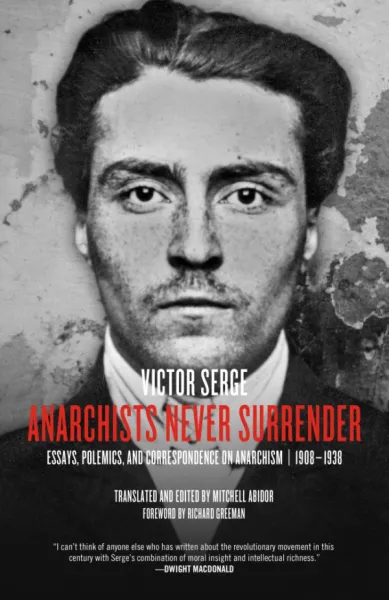
Anarchists Never Surrender: Essays, Polemics, and Correspondence on Anarchism, 1908–1938
Anarchists Never Surrender anthologizes Serge’s previously unavailable texts on anarchism and fleshes out the portrait of this brilliant writer and thinker.
Birth of Our Power
This epic novel is set in Spain, France, and Russia during the heady revolutionary years 1917–1919. From "victory in defeat" to "defeat in victory."
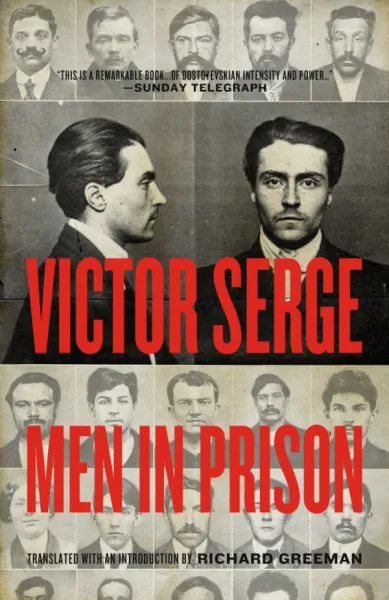
Men in Prison
Everything in this book is fictional and everything is true. I have attempted, through literary creation, to bring out the general meaning and human content of a personal experience.
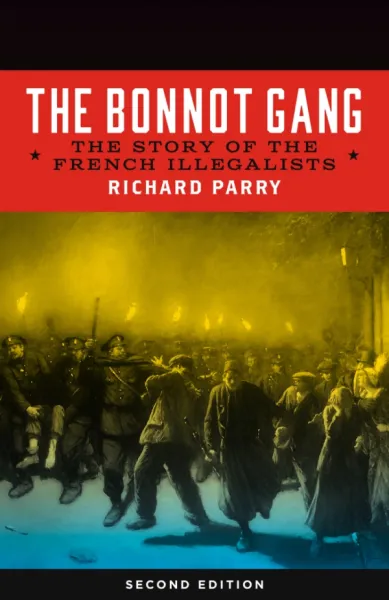
The Bonnot Gang: The Story of the French Illegalists, 2nd ed.
The Bonnot Gang were the most notorious French anarchists ever, and as bank expropriators the inventors of the motorized “getaway.” It is the story of how the anarchist taste for illegality developed into illegalism.
Recently Viewed